Google opens up the smart home to AI agents: what it means for business
Google has launched early access to a Google Home MCP server, letting AI agents control cameras, lights and thermostats — here's what it enables and the risks for business.
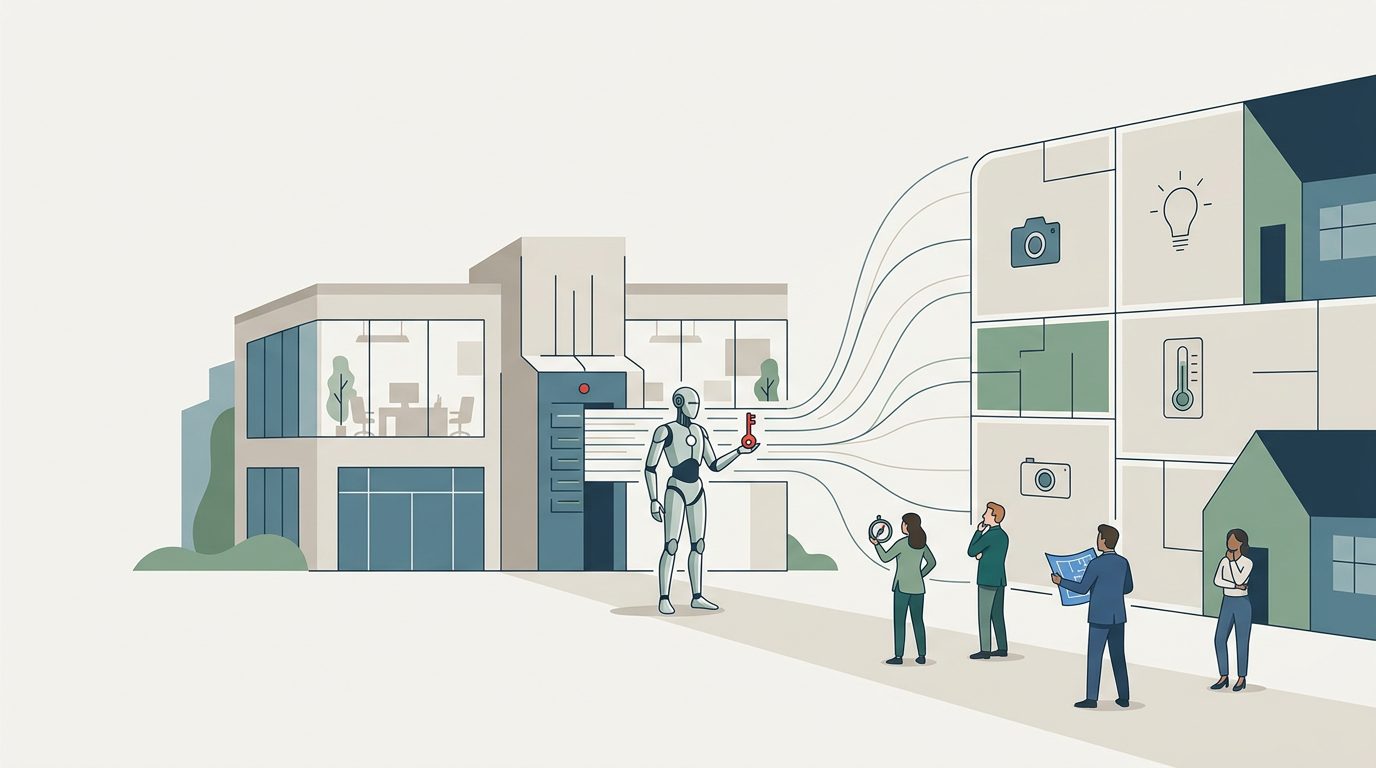
Google has launched an early version of a Model Context Protocol (MCP) server for the Google Home platform. According to TechCrunch, this opens up access to smart devices through AI agents — Claude, ChatGPT, Hermes, OpenClaw, Google Antigravity and any other system that supports the MCP protocol. Users can now ask an agent, by voice or text, to pull up a camera summary, turn on the lights, check an event history, or build a custom home dashboard.
At first glance, this news seems relevant only to owners of smart bulbs and video doorbells. But behind it lies a broader shift: major tech companies are opening up their ecosystems to AI agents, one after another, through a standard protocol. Google already supports MCP in its cloud services, developer tools and Google Workspace. Now it's the turn of home appliances — that is, the part of the tech market inhabited not by programmers, but by ordinary users and small businesses. This is a signal that the question “does this work with AI agents” will soon become as routine as “is there a mobile app” once was.
What exactly Google has launched
According to TechCrunch, access to the Google Home MCP server opens this week and will expand over the coming weeks. For now, the feature is available only to subscribers of the most expensive tier — Google Home Premium Advanced, which costs $20 a month and includes extended camera event history, detailed notifications, video archive search and daily summaries. It's also currently limited to the US — Google has not commented on whether the feature will roll out to other countries or cheaper tiers, or when that might happen.
Technically, the setup works like this: the user creates a project in Google Cloud, configures it to work with Home MCP, passes the connection parameters to their AI agent, and asks it to set up the link. The agent then requests account login and permissions — roughly the same way apps today ask for access to your calendar or contacts. Google says it will publish a detailed setup guide in its Smart Home Developer Center.
This works with any device inside the Google Home ecosystem — Nest doorbells and thermostats, as well as any devices supporting Matter or carrying the “Works with Google Home” label, such as light bulbs. Google is also collecting feedback from early users through its “Smart Home for Developers Community.”
Why this isn't just about light bulbs
The real significance of this news isn't that you can now ask a chatbot to turn off the lights. It's that the smart home has become another point where an AI agent gains the right to act on a person's behalf — not just answering questions, but pressing real buttons in the real world.
For the market, this is an important precedent. If a major company opens up control of physical devices through a standard protocol, similar logic is likely to arrive within a year or two in other services that small businesses rely on: CRMs, point-of-sale systems, booking platforms, ad management dashboards. MCP is designed as a universal “adapter” between different AI agents and different services, so that developers don't have to build a custom integration for every single pair.
For a business owner, this means that compatibility with AI agents will soon stop being exotic. It will become a standard checklist item when choosing a software vendor or equipment — right alongside price and support questions.
Where the practical benefits lie, and where it's too early to celebrate
If a business already uses Google Home-based security cameras, thermostats or lighting — say, in a shop, a coffee house, a showroom, or a small warehouse — there's now, in theory, a way to ask an AI agent things like “what happened at the entrance last night” or “compile a weekly summary from the motion sensors.” That's more convenient than manually scrolling through an app to find the right clip.
But there are several caveats worth keeping in mind before restructuring any processes around this capability.
First, access is currently limited to the most expensive tier and a single country. TechCrunch explicitly notes that Google hasn't confirmed when the feature will reach other tiers or regions. For businesses in Russia and the CIS, this means this particular feature is likely unavailable directly for now — and not just because of subscription geography, but also because of the broader availability of Google services in the region, which depends on current restrictions and the company's local operating conditions.
Second, this is early access — a testing version, not a mature product. Early versions of integrations like this are typically refined over months: permission logic gets adjusted, command-recognition bugs get fixed, and security rules get tightened.
Third — and this applies not just to Google Home but to the whole wave of “AI agents with access to real devices” — the security question becomes sharper. Once an agent can not just read data but take action — switching off the lights on the shop floor, knocking a thermostat off its settings — an agent's mistake or a compromised account turns from an inconvenience into a genuine risk to property and data.
The catch: access to devices is access to data
It's worth separately addressing what hides behind the phrase “access to event history.” Google Home Premium Advanced stores extended camera history, detailed notifications and daily summaries. When a third-party AI agent — whether Claude, ChatGPT or anything else — gets access to that pool of data, a new intermediary appears between your cameras and your data.
For a private home, this is a privacy question. For a business, it's a question of commercial security. Video footage of a sales floor, a warehouse or a back room isn't just images of customers and employees — it can also carry indirect information about how operations work: delivery schedules, staff routes, the contents of display cases. By routing this data through an additional AI-agent service, a company extends the chain through which that information could leak.
The TechCrunch report doesn't detail exactly how Google secures this data at the MCP server level, what access logs are kept, or what restrictions are placed on agents. That doesn't mean protections don't exist — the source simply doesn't say. It's more sensible not to assume anything either way, and instead to check the terms of use and security policy independently once the feature becomes more widely available.
What this means for small business in Russia and the CIS
Right now, this specific Google Home feature is unlikely to be widely applicable: access is limited to one tier and to the US, and the availability of Google services in the region already requires separate consideration when planning. But the underlying trend concerns anyone using smart devices in their operations or planning to automate processes with AI. A few practical steps for the near term:
- Check which smart devices are already installed at your location — cameras, thermostats, locks, sensors — and which ecosystems they're tied to. This is the foundation for any future automation decisions.
- If you're planning to bring AI agents into your operations — for sales analytics, request processing, warehouse monitoring — build into your budget and vendor contract a clause specifying who has access to camera and sensor data and how that access can be revoked.
- Don't rush to connect third-party AI services to your surveillance systems just because it's trendy. Assess exactly what problem it solves — saving an administrator's time, speeding up incident response — and weigh that against the risk of data leaks.
- Keep an eye on how local video surveillance and smart-office providers develop similar features — the Russian and regional market often offers comparable capabilities with local data storage, which removes some of the concerns around cross-border data transfer.
- If you already subscribe to cloud services with extended video storage, reconsider whether you really need the most expensive tier, or whether a basic feature set without AI-agent integration is sufficient while this area is still unsettled.
- Assign one person responsible for smart-device cybersecurity in your company — even if that's the owner or a marketer rather than a dedicated IT specialist. Someone needs to know which passwords and permissions have been granted to which services.
Advertising and marketing deserve separate attention. If you already use AI agents to manage ad accounts, sales analytics or CRM systems, the appearance of MCP integrations in consumer Google services is a signal that similar capabilities will eventually reach marketing tools too. Pay attention to which of the services you use already claim support for MCP or similar protocols — that will determine how easily you'll be able to link different systems into a single automated workflow in the future.
Conclusion
Google has turned the smart home into another point where AI agents gain direct access — not just to information, but to control over real devices. The feature is currently limited to an expensive tier and a single market, and Google isn't disclosing its expansion plans. For businesses in Russia and the CIS, this isn't a reason to rush into changes, but it is a reason to take a closer look at how access to your cameras, sensors and control systems is structured, and to think ahead about who will get access, and under what terms, once capabilities like this become more widely and locally available.