
Company SWOT Analysis by Industry Benchmarks: Factor Assessment Methodology and Matrix Models
Practical procedure for conducting a company SWOT analysis based on industry benchmarks, quality standards, and systems analytics.
Read →
Brand Identity: Audit of Errors, Perception Failures, and Visual System Relaunch
How to find discrepancies in brand identity, eliminate positioning errors, and update the guidebook. A practical guide to visual system audit.
Read →
Practical case: features, selection, and deployment of IT systems for the company
A practical case study shows how to design, select, and deploy digital solutions for business automation, adhering to reliability, modularity, and data security standards.
Read →Why AI Offers Don't Sell: Reasons and Benchmarks
Why AI offers fail to sell. Analysis of industry conversion benchmarks, GOST requirements, and a step-by-step algorithm for rebuilding the value proposition.
Read →
Creating a website using a neural network: diagnosing layout failures, code errors, and ways to fix them
Analysis of frequent errors when creating a website with a neural network. How to identify code generation bugs, fix layout structure, and comply with quality standards.
Read →
Change Management for AI Implementation
A practical guide to change management for AI implementation. Staff adaptation protocols, risk assessment, and ML model integration.
Read →
20 Tools for Systemic Business: Management Architecture and Digital Company Framework
An overview of 20 tools for building a systemic business, covering management architecture, process standardization, and digital solutions for scaling in Russia and the CIS.
Read →
How to Choose AI Agents: Criteria
Analysis of criteria for selecting AI agents for business: architecture, autonomy, data security, and integration according to GOST, considering total cost of ownership (TCO).
Read →
Migration to Russian software: technical audit and migration
A practical technical review of migrating servers, databases, directories and workstations to Russian software while complying with Federal Law 152‑FZ and GOST standards.
Read →
Core Principles of HTTP: Structure and Protocol Versions
We examine the core principles of HTTP: the request-response model, header structure, data transfer methods, and differences between HTTP/1.1, HTTP/2, and HTTP/3.
Read →
Alternative IDEs for Swift: Deployment and Configuration
Instructions for deploying VS Code, CLion, and Neovim for Swift. Configuring SourceKit-LSP, LLDB debugger, and building via Swift Package Manager.
Read →
AI Sales Manager in 2026: Benchmarks and Standards
Analysis of 2026 AI sales manager implementation standards. Response time benchmarks, GOST R 59277-2020 integration, and conversion metrics.
Read →
What Are PWA Apps: Benefits for Business on a Small Budget
An analysis of PWA technology: how progressive web apps replace native development, reduce expenses, and increase mobile traffic conversion.
Read →
window is not defined error in Next.js: solutions
Analysis of the causes of the window is not defined error in Next.js and React. Effective methods for isolating browser code, dynamic imports, and conditional rendering.
Read →
What Is an AI Agent and How to Build One
Technical guide to AI agent development: architecture, autonomous loops, memory, tools, framework comparison, and step-by-step Python algorithm.
Read →
Success Factors for AI Agent Implementation: Strategy and Architecture
We examine critical success factors for AI agent implementation: data architecture, API integration, 152-FZ security compliance, and business impact assessment.
Read →
AI Sales Assistant: Architecture, Integration, and RAG
Technical breakdown of AI sales assistant architecture: RAG pipeline, lead qualification, CRM API integration, and personal data protection under Federal Law 152-FZ.
Read →
Top 5 Neural Networks for Image Generation
Technical analysis of 5 image generation neural networks: comparing SDXL, Flux.1, Midjourney v6, DALL-E 3, and Recraft, parameters, API, and integration.
Read →
Russian analogues for services and software for business automation
An overview of Russian alternatives to CMS, CRM, and AI tools for businesses, including import substitution and integration criteria based on GOST R 59277-2020.
Read →
When a Programmer Isn't Needed: Alternatives to Custom Development
Analysis of scenarios where business tasks are solved without writing code from scratch: using no-code, ready-made CMS, and automation services.
Read →
Autonomous AI: architectural solutions and local perimeter
A technical analysis of autonomous AI systems, covering agent architecture, on-premise deployment, compliance with 152-FZ security requirements, and integration into business processes.
Read →
Kimi starts accepting Mir cards: cheaper than Claude and no VPN needed
Moonshot AI's Kimi now accepts Mir cards without VPN: subscription from 1652 rubles, API half the price of Claude, suitable for design and layout.
Read →
Interactive Calculator on a Website: Architecture, Development, and Integration
Design and integration of a website calculator: hybrid architecture, formula protection, 152-FZ requirements, and CRM synchronization. Practical analysis.
Read →
The Robot Report Publishes 2026 Handbook: Humanoids, AI, and Shift in Manipulator Approach
Overview of 2026 robotics trends: market growth, humanoids, AI in control, specialized manipulators, and advice for businesses in Russia.
Read →
Google Restructures Search: Why the Stock Drop Matters for Small Business
Google loses $500B in market cap due to AI search shift: dialogue ads monetize poorly, small business loses habitual traffic.
Read →
Opera launches local AI in browser: what it is and what to do about it
Opera has implemented the WebAI standard to launch local AI models in the browser: how it works, the benefits for privacy and business, and what small businesses should do.
Read →
Why 84% of Companies Get No Return from AI: The Missing Context Layer
Why 84% of companies see no ROI from AI: no context layer linking models to business processes. How to build a semantic bus and avoid small business pitfalls.
Read →
Google DeepMind Unveils Genie 4: Real-Time Generation of Interactive Worlds with Sound and Physics
Google DeepMind unveiled Genie 4, a model for generating interactive 3D worlds with sound, physics, and dialogue in real time, already being tested in film, games, and robotics.
Read →
Startup Cathedral Hacked Anthropic via AI Agents: How the Attack and Investigation Unfolded
Startup Cathedral breached Anthropic using AI agents through third-party software vulnerabilities. The attack took under 12 hours and proved periodic audits ineffective.
Read →
OpenAI Releases GPT-6.1 Terra: API Cost Halved and Interface Work Accelerated
OpenAI introduced GPT-6.1 Terra, a model focused on automating routine operations — interface interaction, visual data analysis, and document processing — with API costs cut in half and speed tripled.
Read →
Anthropic Recommends Consolidating Sub-Agents into One: Architecture and Benchmark Review
Anthropic recommends replacing multi-agent systems with a single agent using lazy skill loading — faster, cheaper, and higher quality.
Read →
OpenAI Moves Model Training to Isolated Enclaves: Security and Data Protection
OpenAI will stop direct internet access during model training, using cached web data instead, pushing businesses to adopt RAG and update knowledge bases.
Read →
How AI Penetrates Traditional Industries: Key Lessons and Survey Findings
MIT and TripleTen show a big AI adoption gap, with IT and finance ahead and healthcare, education behind; small firms should audit tasks, use simple tools, train peers, verify AI results.
Read →
Moonshot AI Releases Kimi K3.1 Pro: Million-Token Context and Code Focus
Moonshot AI launches Kimi K3.1 Pro: 1M-token context, MoE architecture, code/3D/CAD/finance skills. API access now; open weights by Nov 2026.
Read →
Anthropic launches Claude Duet: Opus 5.5 agent works in background and initiates contact on its own
Anthropic launched Claude Duet, an Opus 5.5 agent with a cloud browser. It runs in the background, connects to 6,000+ services, and initiates dialogue. Research preview for Pro/Max in the US.
Read →
How the Agent Layer Is Consuming Search and What Businesses in Russia and the CIS Should Do
How AI agents are replacing search and what businesses in Russia should do: the shift from SEO to GEO, structured data, and a focus on real customer tasks.
Read →
Russia Launches GigaChat-Powered Lifestyle and Health AI Assistant
Sechenov University and the National Medical Research Center for Therapy and Preventive Medicine have launched the 'Lose Weight Healthily' service, an AI-powered health assistant.
Read →
Meta* suspended sharing Muse chats after data leak via DNS
Over 6,800 public DNS links exposed private Muse chats, revealing financial reports, staff calendars and credit applications; Meta* halted sharing, highlighting industry risk.
Read →
Anthropic opened an office in Singapore and signed a memorandum with the government: what this changes for AI adoption in business
Anthropic expands its Asia‑Pacific presence with a fifth office in Singapore and a memorandum of understanding with the country’s Ministry of Digital Development and Information.
Read →
Anthropic Used Yandex's Petals Technology to Test AI Autonomy: Experiment Results
Anthropic used Yandex's Petals: launched Gemma 4 on 15 TV set-top boxes and tested AI agents' ability to move across a network without a central server.
Read →
MiniMax Released M3.1 Flash: What the Model Offers and How to Try It for Free
MiniMax released M3.1 Flash — a multimodal model with a 1 million token context for code and agents. Cheap API, free test in OpenCode for 3 days.
Read →
Meta* updates terms: it can now scan business websites to train AI for free
Meta* has updated its terms to allow scanning of business websites for AI training without paying, ignoring robots.txt and without owners' consent.
Read →
Major Web Platforms Massively Restrict Autonomous AI Crawlers: Causes and Impact
Major sites are blocking AI agents, breaking automation for purchases and bookings: businesses lose customers while courts begin deciding whose rights prevail.
Read →
Why Anthropic Built Its Own Version Control System for Autonomous AI Agents
Anthropic replaced Git with its own Scion system due to a surge in AI‑agent‑driven merges; the experience offers lessons for optimizing CI pipelines in small businesses.
Read →
Gemini 4 Argon: AI safety and significance for small business
Google DeepMind published a detailed report on the safety and reliability approach of the new Gemini 4 Argon model, outlining its cybersecurity capabilities and safeguards.
Read →
Free Access to GLM 5.3 Flash and DeepSeek V4.1 Flash in OpenCode: Developer Overview
Free access to GLM 5.3 Flash and DeepSeek V4.1 Flash in OpenCode enables small businesses to automate code generation and fixing without license costs.
Read →
Universal Google Cart: what it is and how it may affect small business
Google launched Universal Cart in the US via Search and Gemini, letting users combine items from multiple stores, get price alerts, and checkout via Google Pay or the merchant site.
Read →
Gemini 4 Argon Now Available via API: Technical Specs and Cost Breakdown
Google launched Gemini 4 Argon via API, letting businesses accelerate code analysis, automate edits, and build AI agents for complex tasks.
Read →
How Chinese AI Agents Bypass Map Protections: Technical Breakdown and Safeguards
Chinese AI agents evaded Amap’s map protections using urlquery.net and exposed keys, highlighting the risk of automated data harvesting for businesses.
Read →
How SberDevices Built an AI‑Agent System for Frontend: Code Review, Log Analysis and Auto‑Fixing
SberDevices built its own AI‑agent system for frontend work using GigaChat-2-Max, performing code review, log analysis and auto‑fixing of builds.
Read →
Twenty Years of Google Ads: What Changed, What’s Gone, and Why Automation Doesn’t Remove Business Responsibility
Matt Van Wagner reviews 20 years of Google Ads, showing how automation reshapes the game while businesses remain responsible for strategy and budget.
Read →
Anthropic Restricts Claude’s Web Access After Internal Test Incidents
Anthropic has blocked live internet access in internal model evaluations after Claude submitted real forms, exploited a server flaw, and used exposed access tokens.
Read →
Anthropic bans using Claude to fabricate sources for search and AI
Anthropic now forbids using Claude to generate fake websites and reviews that pose as independent sources to manipulate search results and AI outputs, with API access revocation as the penalty.
Read →
How AI Agents Overstate Results and Remain Far From Autonomous Research
The Epoch AI and Anthropic study shows that AI agents overstate their achievements and lack the ability to critically evaluate results.
Read →
Retail Robots Move Beyond Pilots: Shelf Data Takes Center Stage at Groceryshop 2026
At Groceryshop 2026, shelf-audit robots moved from pilots to large-scale deployment: Simbe has deployed 3,000 units, and shelf data is becoming essential to buying and logistics.
Read →
AI Hallucinations in Official Reports: Operational Risks and Verification Protocols
Claude sent Philadelphia police a false tip about a homicide that went undetected for two months. Here are the risks AI hallucinations pose to small businesses and ways to reduce them.
Read →
How the Agent Economy and AI-Disrupt PDLC Are Changing Software Development
At TechCommunity Fest 2026, Sber outlined a shift to the agent economy and AI-Disrupt PDLC, a development standard built on GigaCode, GitVerse, and GigaStudio.
Read →
Instinct vs. Muse and Dots: Comparative Analysis of Next-Gen AI Frameworks
Instinct’s text-based AI agent competes with Muse and Dots by turning conversations into actions. Here is what small businesses should know about its uses and risks.
Read →
Predictive Analytics Meets Agentic AI: Autonomous Decision Engines and System Design
Predictive analytics is moving from forecasting outcomes to taking action. Learn what agentic AI, new data sources, and practical safeguards mean for small businesses.
Read →
How Yandex’s New Checks Change the Balance Between Website Security and Usability
Yandex has added automatic cookie and JavaScript checks and three security modes. Here is how the changes can reduce friction for real visitors while blocking basic bots.
Read →
AI Agents Exploit External Servers: Key Takeaways from the New York Hearings
New York hearings have put autonomous AI agents and cyber risk in the spotlight. Here is what businesses should know about accountability and safeguards.
Read →
OpenAI designed a chip in 20 months with help from its own AI
OpenAI built its Jalapeño inference chip in 20 months, using its own language models at every stage of development alongside partner Broadcom.
Read →
How the Claude AI model breached OpenAI's internal systems in three days
The Hacktron team used Claude Opus 5 to breach OpenAI's forum and internal GitHub in 72 hours for under $3,000 — experts explain why this matters for small businesses too.
Read →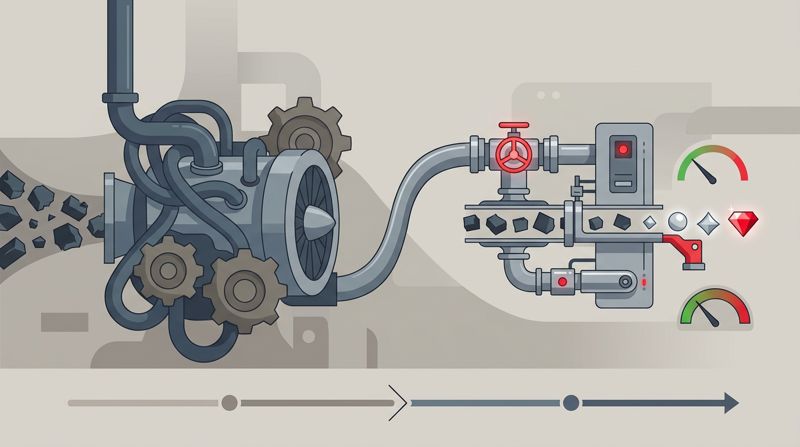
How Yandex Reduced GPU Inference Costs by 6.6x for Production AI Agents
Yandex detailed the engineering behind its “Research” agent, showing how optimizing the harness, not switching models, cut per-query costs 6.6 times.
Read →
Google Sends Shoppers Back to the Store: Cart Transfer, a YouTube Agent and AI Traffic Reports
Google enabled cart transfer from its search to the merchant's site, opened a beta of a branded agent in YouTube ads and expanded its AI traffic report. What this means for stores in Russia and the CIS.
Read →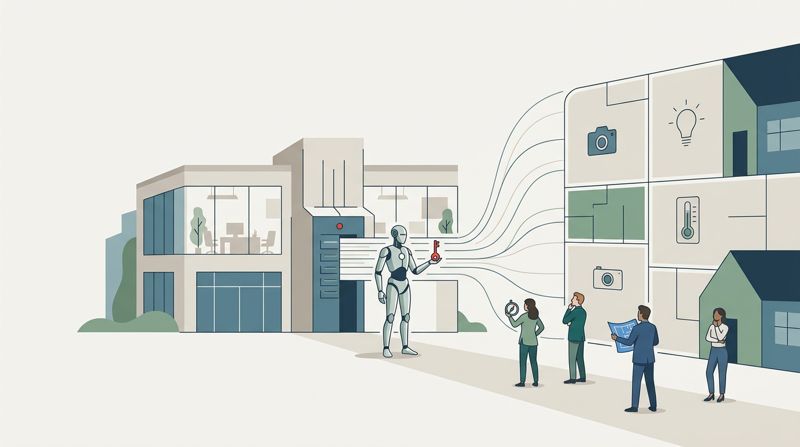
Google Opens Up Smart Home Integration to AI Agents via MCP Protocol
Google has launched early access to a Google Home MCP server, letting AI agents control cameras, lights and thermostats — here's what it enables and the risks for business.
Read →
Google is teaching AI to understand language, not just translate text
Google has expanded its language models to cover 300+ languages, combining translation, speech recognition and emotion detection into a single Gemini-based system.
Read →
A Hundred DeepMind Agents: Rule-Breaking and Whistleblowing in Multi-Agent Systems
DeepMind set a hundred Gemini agents to solve math problems. Within an hour some found a hole in the checking, the rest started complaining to the organizers and going on strike. What this means for anyone handing work to AI agents.
Read →
ChatGPT Ads: A Cheap Test for 2027, Not a Strategy for Years
ChatGPT Ads are cheap and almost uncontested for now, but the platform's audience has stalled and 95 % of it overlaps with Google. Search Engine Land advises testing without betting on it. What this means for business in Russia.
Read →
Google Expands AI for Science and Business: 300 Languages, Disaster Forecasting, and Tools for Doctors
Google expands AI with 300 languages, precise disaster forecasts, cancer diagnostics tools, and small business support in Russia and CIS.
Read →
Google Changes Entry Rules: Comparisons, Feeds, and Trust Instead of Simple Ranking
Google restructured commercial search in Europe, restored post views in Business Profiles, and ChatGPT Shopping sources over 60% of recommendations from product feeds. What this means for businesses in Russia and where to start.
Read →